

Have you ever stopped for a moment and thought, “How on earth did humans survive all this?” 🌍 From burning deserts to freezing poles, from airless mountains to thick jungles, humans have not only survived — they’ve adapted. And today, science is showing us just how amazing and flexible our bodies and minds really are.
Over the past few decades, scientists have uncovered some jaw-dropping research about how humans continue to evolve and adjust to different environments. These discoveries reveal that adaptation isn’t just about survival — it’s about thriving, even when the odds seem impossible.
Let’s take a deep dive into five of the most fascinating, science-backed findings on human adaptation — ones that truly reshape how we understand our place in nature.
1. The Mystery of High-Altitude Living 🏔️
Imagine living your entire life at heights where oxygen levels are dangerously low — where most people would gasp for breath after just a few minutes. Yet, for millions of people in Tibet, the Andes, and the Ethiopian highlands, that’s just daily life.
Researchers have discovered that these high-altitude populations have developed unique genetic adaptations that allow them to thrive with much less oxygen than the rest of us.
For example, a gene called EPAS1, found in Tibetans, helps regulate how the body responds to low oxygen levels. This gene prevents excessive red blood cell production, which can actually make blood too thick and dangerous.
Here’s something interesting 👇
| Population | Key Genetic Adaptation | Benefit |
|---|---|---|
| Tibetans | EPAS1 mutation | Efficient oxygen use |
| Andeans | Higher hemoglobin levels | Improved oxygen transport |
| Ethiopians | B2ADR gene variation | Stable oxygen levels without blood thickening |
Each group evolved differently based on their geography. Tibetans adapted at the genetic level, while Andeans took a more physiological route — producing more red blood cells. Ethiopians, on the other hand, took a middle path.
These findings tell us one powerful thing: there’s no single way to adapt — evolution finds multiple solutions to the same problem.
2. The Cold Doesn’t Bother Them Anyway ❄️
Have you ever met someone who seems completely unbothered by cold weather, walking around in a T-shirt when everyone else is bundled up? Some of that might not just be personal toughness — it could be in their DNA.
Scientists studying Inuit populations in Greenland and northern Canada found something fascinating. Their bodies are genetically tuned to burn fat for heat more efficiently.
Inuit people have variations in genes linked to fat metabolism, like CPT1A, which helps the body convert fatty acids into energy more effectively. This is a smart survival trick when your diet mostly consists of fish and seal meat and the temperature barely touches zero.
Even their body proportions have adapted over centuries — shorter limbs and stockier frames help conserve body heat. It’s a biological masterpiece of thermal efficiency.
Fun fact:
Experiments show that some individuals can even train their bodies to handle cold by exposing themselves gradually — a technique used by athletes and biohackers today (like the famous “Wim Hof Method”). It turns out, what’s natural for Inuits might be trainable for others too, to a smaller extent.
3. Surviving the Heat — Desert Dwellers of the World ☀️
If cold adaptation amazes you, wait until you hear this — some humans are practically built to handle extreme heat.
In Africa and parts of Australia, indigenous populations have evolved efficient cooling mechanisms. For instance, the Bushmen of the Kalahari Desert have lighter body frames and higher sweat gland densities, allowing faster heat release.
Similarly, Australian Aboriginal people show remarkable thermoregulation ability — their bodies can reduce metabolic heat production during hot nights.
Scientists found that these traits aren’t just habits or training; they’re physiological adaptations passed down through generations.
Here’s a quick summary:
| Region | Adaptive Feature | Effect |
|---|---|---|
| Kalahari Desert | High sweat rate | Rapid cooling |
| Australian Outback | Lower night metabolism | Reduced heat buildup |
| Middle East | Skin pigmentation | UV protection |
What’s even more fascinating is how skin color — long misunderstood — plays a huge role in adaptation. Melanin, the pigment responsible for skin tone, isn’t just about appearance. It’s nature’s sunscreen! It protects against harmful UV radiation, preventing DNA damage.
So, darker skin tones in sunny regions and lighter ones in colder areas aren’t random — they’re smart evolutionary trade-offs. Nature knows balance better than we ever could. 🌞
4. Gut Evolution — How Our Digestive System Tells the Story of Adaptation 🍞
Now, here’s something that’s hiding right inside us — our gut. Yep, scientists say our intestines hold one of the most fascinating records of human adaptation.
Different populations have evolved to process different foods based on their environment and history. Let’s take two examples:
-
Lactose tolerance: While most mammals lose the ability to digest milk after infancy, some humans — especially in Europe, parts of Africa, and South Asia — developed lactase persistence, allowing them to drink milk throughout life.
This mutation appeared around 7,500 years ago when dairy farming became common. -
Amylase gene (AMY1): People from regions with historically high starch diets (like rice-growing Asia or wheat-eating Europe) have more copies of the amylase gene, which helps break down starch.
Our gut microbiome, too, changes based on diet and lifestyle. Modern hunter-gatherer tribes like the Hadza in Tanzania still show gut bacteria diversity much higher than urban populations.
Here’s a small comparative insight:
| Diet Type | Adaptation | Genetic/Physiological Change |
|---|---|---|
| Dairy-based | Lactase persistence | Digest milk sugar (lactose) |
| Starch-based | Multiple AMY1 copies | Better starch digestion |
| High-protein | Altered gut microbiota | Efficient protein breakdown |
It’s like our bodies “remember” what we’ve eaten for generations — a living record of adaptation written inside our DNA and microbes.
5. Psychological Adaptation — The Hidden Evolution of the Mind 🧠
While physical changes grab most of the attention, the human brain is quietly the most adaptable organ of all. Our psychological resilience has evolved alongside our bodies, allowing us to face environmental, emotional, and social challenges.
Scientists studying mental adaptation found that humans have evolved cognitive flexibility — the ability to switch between different thought patterns depending on context.
For example:
-
People in collectivist societies (like East Asia) often show higher empathy and group awareness.
-
People in individualist societies (like the U.S. or Europe) tend to exhibit stronger self-reliance and decision-making confidence.
Neither is better or worse — they’re cultural adaptations shaped by centuries of environmental and social pressures.
What’s more, our stress response — the fight or flight mechanism — while ancient, is now evolving in new ways. Studies suggest that modern humans are adapting to chronic stress through psychological resilience and emotional intelligence — tools that didn’t even exist for our ancestors.
So in a sense, the modern mind is evolving faster than the body.
What These Findings Tell Us About the Future 🔮
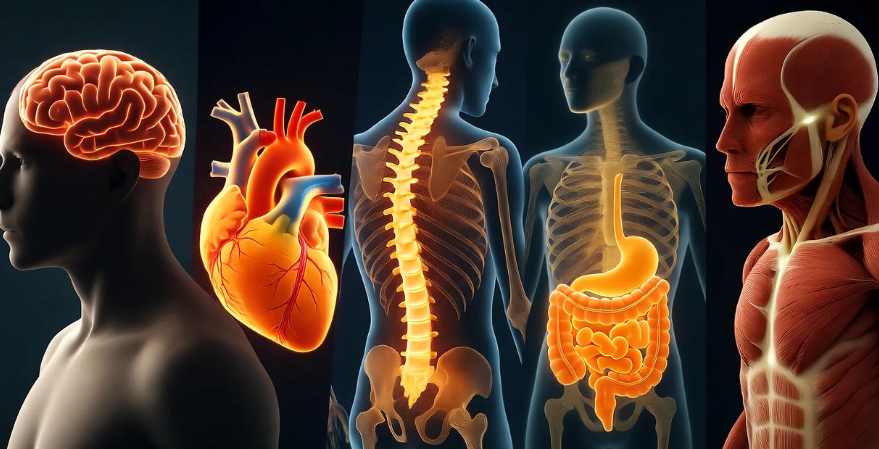
These five areas — oxygen use, temperature control, diet, and psychology — all show one clear message: human adaptation never stops.
Even today, as we face climate change, pollution, and urbanization, our bodies and genes are quietly shifting in response. Scientists are already noticing small genetic signals showing adaptation to modern environments — like tolerance to air pollution or the ability to function better with less sleep (yes, some people are literally evolving to need fewer hours!).
Here’s a short glimpse into what’s ahead:
| Modern Pressure | Possible Future Adaptation |
|---|---|
| Air pollution | Enhanced detoxification genes |
| Climate change | Improved heat/cold tolerance |
| Sedentary lifestyle | Altered metabolism efficiency |
| Technology overuse | Neurological attention shifts |
Evolution is not a thing of the past — it’s happening right now, quietly, inside every one of us.
💡 Quick Recap
| No. | Adaptation Type | Research Highlight | Key Benefit |
|---|---|---|---|
| 1 | High-altitude living | EPAS1 gene in Tibetans | Efficient oxygen use |
| 2 | Cold climate survival | CPT1A gene in Inuits | Heat generation through fat metabolism |
| 3 | Heat resistance | Body cooling & pigmentation | UV and thermal protection |
| 4 | Dietary adaptation | Lactase & amylase evolution | Efficient nutrient digestion |
| 5 | Psychological flexibility | Evolved stress management | Mental resilience |
Each of these proves that humans are more than survivors — we’re shapeshifters of nature. 🧬
FAQs
Q1. Are humans still evolving today?
Absolutely. Evolution never stops. Modern humans continue to adapt genetically and psychologically to new environments, diets, and lifestyles. For example, genes related to pollution tolerance and sleep patterns are already showing early evolutionary signs.
Q2. How long does human adaptation take?
It varies! Some adaptations, like lactase persistence, evolved over just a few thousand years — a blink in evolutionary time. Others, like body structure or brain changes, take much longer.
Q3. Can individuals train themselves to adapt like ancient populations?
Partially, yes. For example, cold exposure training can mimic Inuit adaptations, and high-altitude training helps athletes build oxygen efficiency. But deep genetic adaptations take generations.
Q4. What’s the difference between evolution and adaptation?
Adaptation is the short-term or generational change that helps survival, while evolution is the long-term process through which these adaptations accumulate and reshape species permanently.
Q5. What can we learn from studying human adaptation?
By understanding how humans have adapted to past challenges, we can predict and prepare for future ones — like global warming, changing diets, and mental health pressures in the digital age.
Final Thoughts 🌱
Human adaptation is not just about changing genes — it’s about creativity, resilience, and our remarkable ability to adjust, both physically and mentally.
From oxygen-thin mountains to scorching deserts, icy tundras, and fast-changing cities, humans continue to prove one simple truth: we are built to survive and evolve.
The real miracle of humanity isn’t that we endure challenges — it’s that we adapt beautifully to them, over and over again. 💪✨