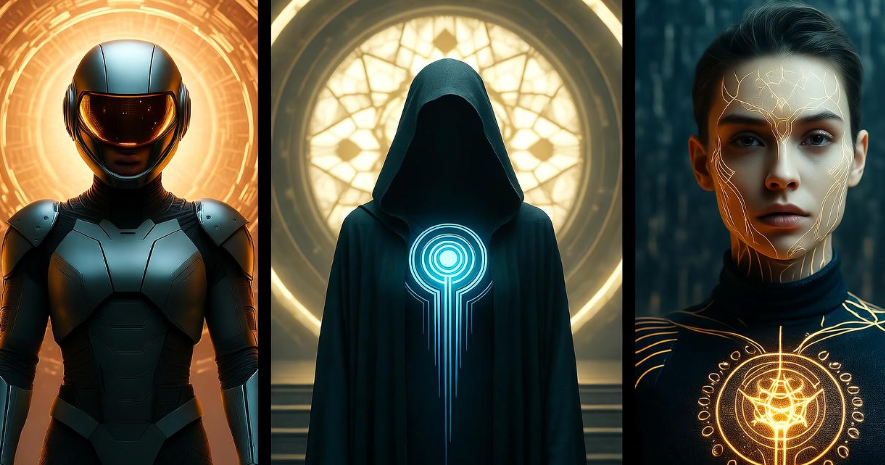
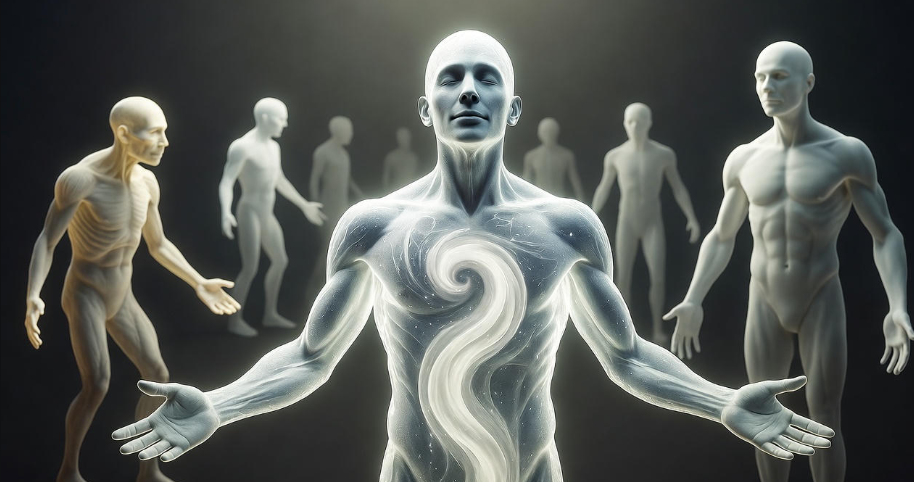

Have you ever wondered what humans might look like thousands of years from now? 🤔 Will we still be the same species walking, talking, and scrolling on our phones? Or could science and technology change us into something completely different? Well, scientists have been studying this for decades — and the answers might surprise you.
Let’s explore what science actually says about the future of human evolution, how our genes, lifestyle, and technology are reshaping who we are, and what it all means for the generations yet to come.
What exactly is evolution?
Before we jump ahead, it’s good to remember what evolution really means. Evolution is not something that happens overnight. It’s a slow, natural process through which species change over time.
Our ancestors — the early humans — started evolving from apes more than 6 million years ago. That long journey gave rise to modern Homo sapiens — us. Evolution doesn’t stop. It continues, even today, just in ways that might not always be visible to the naked eye.
Scientists believe that evolution still works on humans, but now, instead of nature alone guiding it, technology, environment, and human choices are playing major roles. 🌍💡
Is human evolution slowing down or speeding up?
This is one of the biggest scientific debates. Some researchers argue that evolution is slowing because modern medicine and global societies protect most humans from natural selection pressures — things like disease or survival struggles.
But others say the opposite — that human evolution is actually speeding up, just in new directions. For instance, the last few thousand years have seen rapid genetic changes related to skin color, lactose tolerance, and immunity.
Here’s a small look at how fast things have changed:
| Trait | Approximate Time of Change | Reason |
|---|---|---|
| Light skin in Europeans | 8,000 years ago | Adaptation to less sunlight |
| Lactose tolerance | 7,500 years ago | Dairy farming |
| Disease resistance genes | 5,000 years ago | Exposure to new pathogens |
| Shorter sleeping patterns | Ongoing | Lifestyle and light exposure |
So, yes — we are still evolving, but in ways shaped by modern living.
How technology is rewriting evolution
Let’s be honest — no species has ever changed its own destiny like humans have. 😄
We no longer wait for nature to change us; we are engineering our own evolution through technology.
Here are some of the major scientific forces changing human evolution right now:
-
Genetic engineering – With CRISPR and other DNA-editing tools, scientists can now modify genes to remove diseases or enhance traits. Future humans might be born with perfect eyesight, resistance to cancer, or even higher intelligence.
-
Artificial intelligence integration – Brain-computer interfaces (like Neuralink) are blurring the line between biology and machine. Humans might soon “upgrade” their minds with AI assistance — imagine learning new languages instantly or controlling machines by thought. 🤖🧠
-
Space colonization – When humans start living on Mars or other planets, new environmental pressures will shape their bodies — different gravity, radiation, and oxygen levels could create distinct human sub-species over generations.
-
Medical advancements – We now replace organs, restore sight, and even slow aging. As medical technology progresses, natural selection might lose its power since fewer people die from biological weaknesses.
In short: our evolutionary path is no longer just biological — it’s becoming techno-biological.
Will humans look different in the future?
Yes — but probably not like sci-fi aliens! Scientists predict subtle but noticeable changes over thousands of years. Let’s imagine a few likely possibilities:
| Future Feature | Scientific Reason |
|---|---|
| Larger heads | To accommodate growing brains and tech implants |
| Straighter backs | Due to ergonomic lifestyles and less physical labor |
| Smaller teeth and jaws | Because of softer, processed diets |
| Longer fingers | Increased screen and device use |
| Thicker bones | Space travel and different gravity adaptations |
Some studies even suggest that the human face might become more symmetrical due to aesthetic preferences in mate selection — basically, we’re evolving to look more “attractive” by our own standards.
Crazy, right? 😅
The rise of “digital evolution”
This is a term many scientists now use to describe how our digital lives are shaping us. Constant exposure to screens, social media, and artificial light changes how we think, sleep, and interact.
-
Our attention spans are shrinking.
-
Our visual memory is becoming stronger.
-
We rely more on digital tools than raw memory.
In the long run, these changes might not only affect behavior but also brain structure. The human brain could evolve to process digital information faster, at the cost of emotional depth or patience.
Evolution is no longer just about physical survival — it’s about mental adaptation to an increasingly digital world. 💻📱
Climate change and the environment’s role
While technology changes one side of evolution, the environment continues to shape another. Climate change, pollution, and urban living could bring new evolutionary challenges.
For example:
-
Hotter climates may lead to darker skin pigmentation for better UV protection.
-
Air pollution might drive the evolution of stronger lungs or better toxin filters in the body.
-
Urban overcrowding could affect social and stress-related genes.
Evolution always finds a way to adapt life — even to man-made challenges.
Could humans split into different species?
It sounds like a sci-fi plot, but it’s a question scientists take seriously. If humans live in completely different environments — say, some on Earth, others on Mars — isolation could eventually lead to genetic divergence.
Over tens of thousands of years, these groups might become genetically distinct species, unable to interbreed naturally.
So yes — the distant future might hold multiple types of humans, each adapted to their world.
Longevity and aging — are we evolving to live longer?
Human lifespans have nearly doubled in the last 200 years, thanks to medicine and hygiene. But that’s not evolution — that’s technology. The question is: can evolution make us live longer biologically?
Some scientists think yes. Our bodies are slowly adapting to less physical stress and better nutrition, while genes linked to long life (like FOXO3) are becoming more common.
Add to that the rise of anti-aging therapies, stem cell treatments, and genetic editing — and it’s possible that humans of the future may routinely live past 120 years. 😯
The evolution of the mind and consciousness
Now, this is where it gets truly fascinating. Evolution isn’t just about bones and muscles — it’s also about the mind. As societies and technologies evolve, so do human emotions, intelligence, and consciousness.
Future humans might:
-
Be more empathetic due to global interconnectivity.
-
Develop hybrid intelligence — combining human intuition with machine logic.
-
Communicate faster, maybe even telepathically through neural devices.
-
Experience expanded consciousness — understanding themselves and the universe at a deeper level.
In essence, evolution might not just make us “smarter” — it could make us more self-aware.
Ethical questions of directed evolution
When humans begin editing their own genes, one question becomes unavoidable: how far is too far?
If we can remove diseases, that’s great. But what about choosing intelligence, beauty, or emotions? Should evolution be designed or discovered? 🧬
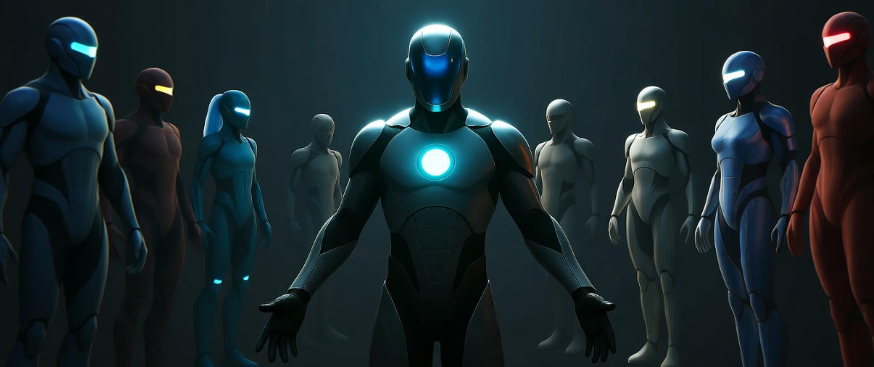
Ethicists warn that genetic modification could create a new class divide — between those who can afford enhancements and those who can’t. This is sometimes called “genetic inequality.”
So while science gives us power to evolve faster, it also challenges us to remain humane.
Could evolution ever end?
Some people wonder: if technology solves all our problems, will evolution just stop?
The truth is — no, it won’t. Evolution never ends; it just changes its direction. Even in a world where humans merge with AI or live digitally, those systems themselves will continue to evolve.
So, the future of human evolution isn’t an ending — it’s a transformation. 🌌
Quick overview: What scientists predict for the next 10,000 years
| Time Period | Evolutionary Trend | Possible Cause |
|---|---|---|
| 100 years | Integration of AI and biotech | Human-machine interfaces |
| 1,000 years | Genetic selection and designer babies | DNA control |
| 5,000 years | Adaptation to new climates | Global warming |
| 10,000 years | Human species diversification | Space colonization |
| 50,000+ years | Post-biological evolution | Digital consciousness |
Pretty wild, right? The future might look nothing like what we see today.
What about emotions and relationships?
This is a part of evolution that science rarely ignores. Human bonding, love, empathy, and connection have been survival tools for thousands of years. But as our world gets more digital, will we lose that emotional side?
Scientists think emotions will evolve too — not disappear. Humans might learn to love in new ways, possibly even with virtual beings or AI companions. But at the core, we’ll still crave connection, because that’s built deep into our DNA.
Love and compassion, it seems, are timeless evolutionary traits. ❤️
Are we becoming a new species — Homo technologicus?
Many experts already call modern humans “Homo technologicus” — humans who have merged with their own inventions. From smartwatches to implants, technology is now an extension of our biology.
The next step could be full integration, where humans evolve into a species that relies equally on natural evolution and artificial upgrades. Some even say that’s when evolution becomes conscious — humans choosing how they evolve.
So maybe the next chapter in evolution isn’t “survival of the fittest” but “adaptation of the smartest.” 🧠✨
FAQs
Q1: Are humans still evolving today?
Yes! Even though modern medicine reduces natural selection, our genes continue to change. We’re adapting to diet, disease, and technology faster than ever.
Q2: Can we control our own evolution?
Partly, yes. With gene editing and biotechnology, humans can now influence traits and health — something no other species can do.
Q3: Will humans ever stop aging?
Probably not completely, but science is working on slowing it down. We may reach a stage where aging is manageable, and lifespans extend much longer than today.
Q4: Could AI replace human evolution?
AI won’t replace it but will become part of it. Humans and AI are likely to evolve together — forming a hybrid species of sorts.
Q5: Will humans in space evolve differently?
Yes. Different gravity, radiation, and atmosphere on other planets could create new adaptations and possibly even new human subspecies over millennia.
Final thoughts 🌍
The future of human evolution isn’t something far away — it’s happening right now. Every time we use technology, change our habits, or edit our genes, we’re taking part in it.
Science shows us that the next stage of evolution won’t just happen to us — we’ll be the ones designing it. And that’s both exciting and a little scary.
But maybe that’s what makes humanity special: we don’t just evolve; we imagine, invent, and reinvent ourselves. The story of evolution isn’t over — it’s just getting started. 🚀